Rene's Journey in Sustainable Farming in Cameroon's Dja Landscape
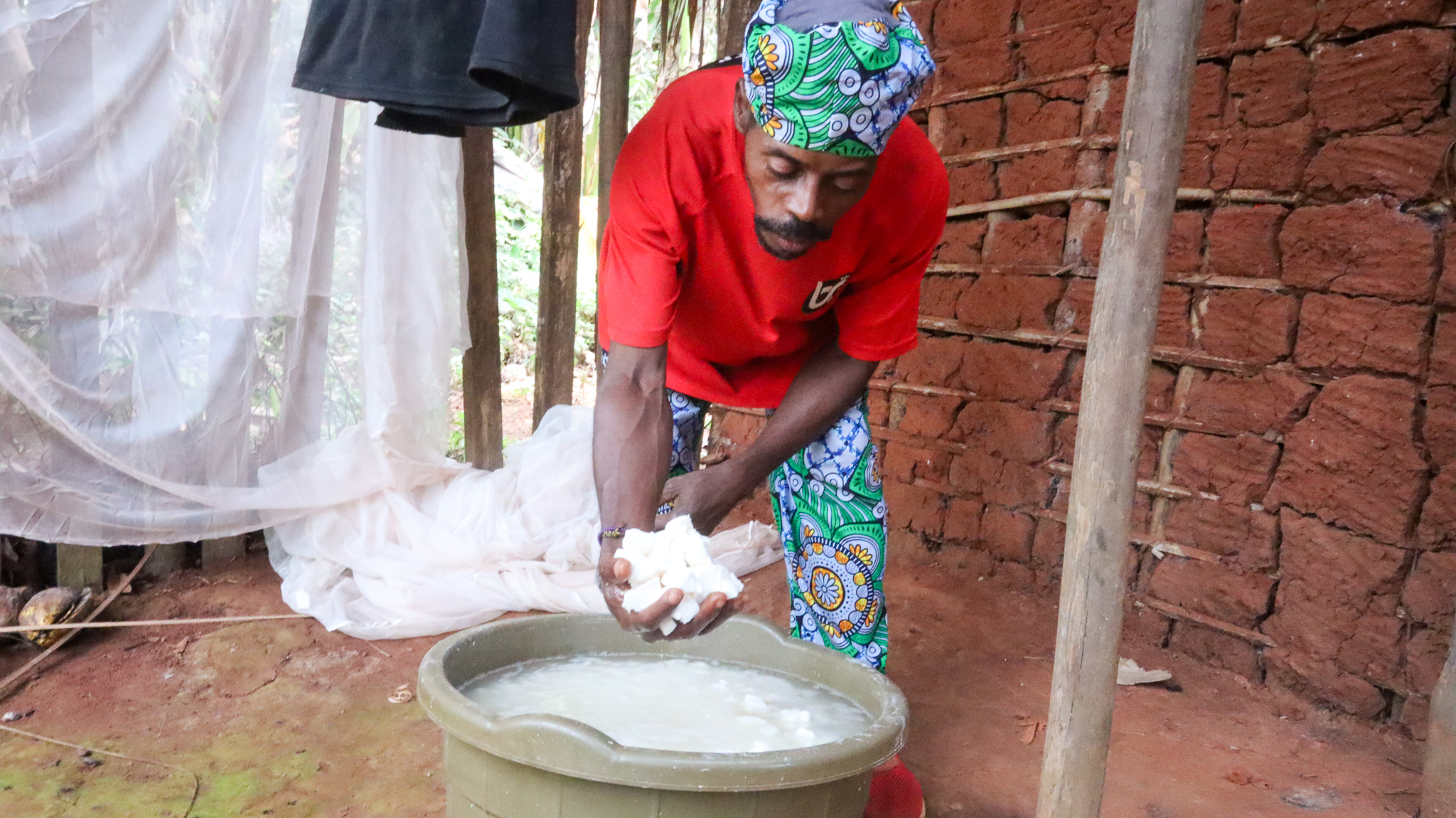
Ndamey Rene showing some of the cassava he harvested from his farm in January 2026.
For most of his life, Ndamey Rene believed the forest would always be his family’s lifeline. In Nomedjo, a village bordering the Dja Faunal Reserve, that belief shaped childhoods and futures. Ndamey, an Indigenous farmer, grew up learning that survival came from what the forest could give.
Today, he is part of a quiet shift in his community—one rooted not in extraction, but in cultivation. Nomedjo, once fully dependent on the forest, is increasingly embracing farming and agroforestry as a more sustainable way forward. And on his father’s land, Ndamey’s hands are already proving what that change can look like.
Seeds of Change in Nomedjo
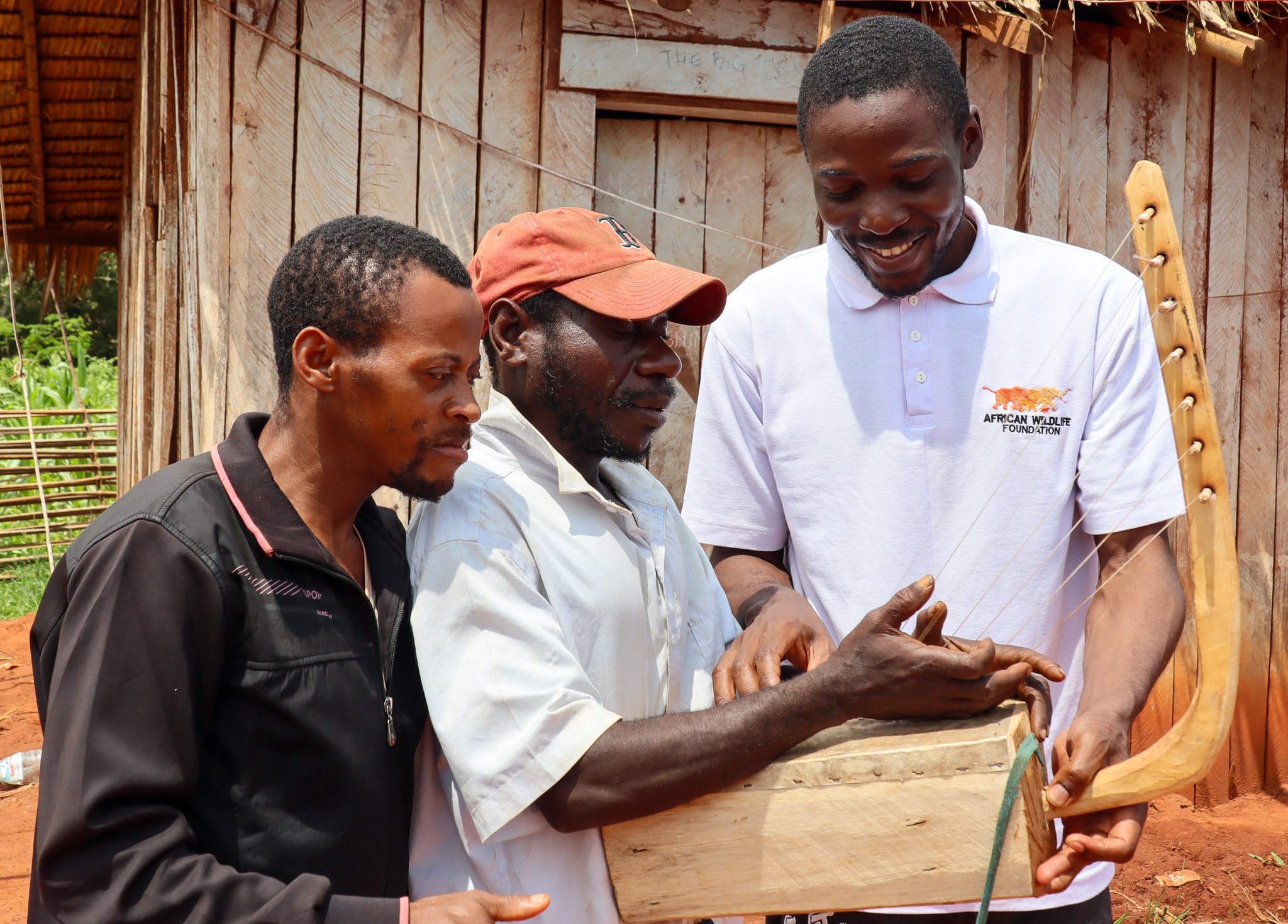
Ndamey Rene (far left) alongside a fellow community member and AWF Senior M&E Officer Antoine Melingui (far right) working hand in hand to conserve Dja Faunal Reserve.
In early 2025, with support from the European Union, the African Wildlife Foundation (AWF) provided Rene with cassava, cocoa seedlings, groundnuts, and maize to plant on his father’s land in Nomedjo, located in Lomie District in Cameroon’s Congo Basin. The village is famed for its tradition, proud of its heritage and home of the Baka people.
Rene chose to grow cassava and cocoa together on the same plot. While the cocoa will take two more years before maturity, he has already begun harvesting cassava, maize, and groundnuts.
He is now processing the cassava yields into flour and other products for sale in front of his home because he lacks the funds to carry them to the local markets.
“I used money from the sales to buy my children books for school,” he explains. “Before, I worried about how to provide for them. Now, every bag of cassava flour I sell gives me hope. With the different sensitizations I have received, I understand that farming is a way to secure my children’s future.”
Adding Value, Strengthening Households
By adding value before selling, Rene is working toward better returns for his family. His wife and children often help peel cassava or shell groundnuts, making the work a shared household effort that supports resilience and stability.
A father of four, Rene has started taking his children with him to the farm.
“My father used to take me to the forest; now I take my kids to the farm,” he says. For Rene, farming is closely tied to the future he wants for his children—one shaped by sustainability, learning, and opportunity.
Sustainable Livelihoods That Support Conservation
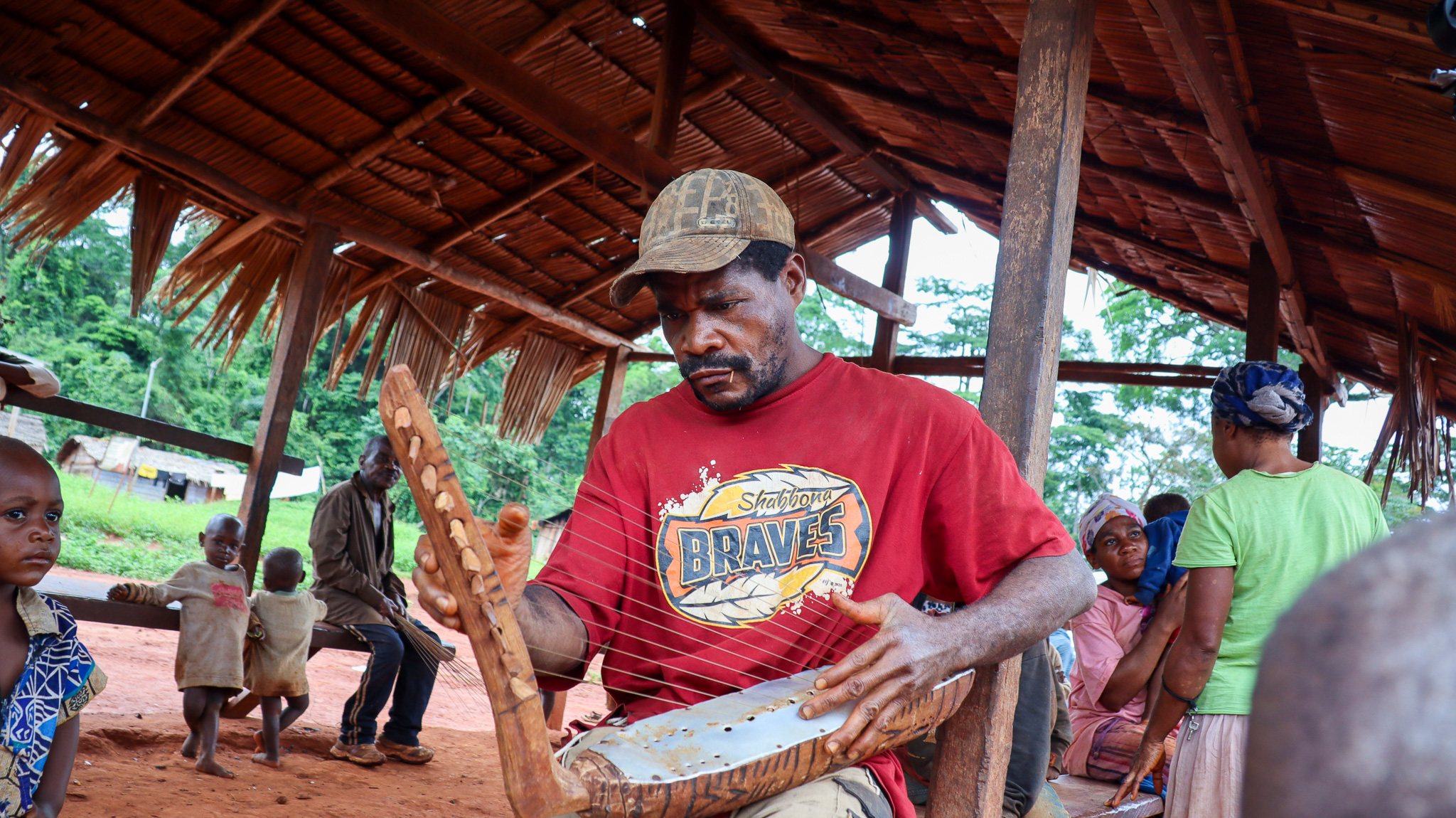
Baka Indigenous communities in Dja Faunal Reserve.
Lesly Akenji, AWF’s Senior Landscape Manager in Dja, highlights the broader impact of practical livelihood options in communities around the Dja Faunal Reserve.
“Stories like Rene’s show that conservation succeeds when alternatives are practical and profitable. Similar things are happening in other Indigenous communities, such as Bidolone and Alop,” Lesly says.
“By choosing farming over poaching, these communities are protecting wildlife while feeding their families. This is the kind of transformation we want to see across communities around the Dja Faunal Reserve—families thriving through sustainable agriculture, while the forest remains intact for future generations.”
Rene’s journey has made him a role model in his village. His cassava and groundnut harvests, and the cassava flour he sells from home, reflect steady progress—supporting his household needs today while he continues to invest in the cocoa that will mature in the years ahead.